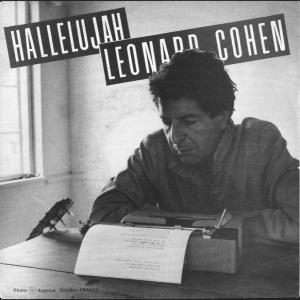
Leonard Cohen - Hallelujah Song Meanings
Lyrics:
Now I've heard there was a secret chord
That David played, and it pleased the Lord
But you don't really care for music, do you?
<... See the rest of these lyrics
Search Hallelujah Lyrics on KOvideo
Top Rated Interpretation
crissy
February 1st, 2009 07:27PM
< Click a star to vote!
Most of the interpretations I have heard refer to biblical stories and of course it is impossible to ignore the analogies with King David and Bathsheba. However,I think these can obscure the meaning of the song and I would rather go beyond them. Analyzing a poem line by line sometimes misses the core of meaning which may actually be not fully realized by the poet himself.What after all was Kubla Khan, Coleridges poem about? It came out of a drug-induced reverie and the words are impossible to interpret literally.
What I see in the poem is a man who finds it hard to reconcile his own singular personal quest for truth as a spiritual seeker and as a creative artist with earthly love.He is "overthrown" by the beauty of the woman bathing on the roof and intoxicated with desire for her yet with that comes compromise.Being tied to a kitchen chair suggests being bound to domesticity and having his hair cut recalls Samson whose strength was lost when Delilah cut his hair.He feels he has sacrificed his power for ephemeral sexual desire,emotional needs and freedom from the burden of loneliness.
And inevitably the hallelujah, the ecstasy fades and withit bitterness and disillusionment since his lover has no feeling for creativity as evidenced by her lack of interest in music,his explanation of which seems to fall on deaf ears.
At the same time,the sexual magnetism, "down below" has diminished or even gone in the way that the energy of many relationships weaken into dead habit.
So there is a sense he has been left with nothing, doubting a god above and likening earthly love to a gunfight.It is as if he has betrayed his deepest yearnings and is only left with a cold and broken hallelujah, an empty exhortation, a state of inner desolation.
Yet the tone of the song is so bittersweet, so beautiful and sad that there might be a suggestion that he has reconciled those feelings and accepted the limits of the relationship,knowing that even sharing a life with someone cannot assuage his inner loneliness.
Hallelujah is a beautiful,ironic and melancholy masterpiece.
musicjunkie
June 4th, 2006 07:35PM
< Click a star to vote!
I wasn't sure what artist to put this under, sine SO many people have done Hallelujah. There are some really good versions out there. I personally like the Rufus Wainwright verson A LOT. I would have sumitted this interpretation under his name, only I saw someone wanted an interpretation on this version, so you can listen to my VERY long analysation. I'm going to do this thing line by line, and I know that there are a lot of different ways Leonard Cohen has song it himself, so I'm going to do the version I'm most famillar with, so here it goes.
The first line, "I heard there was a secret chord, that David played, and It pleased the Lord," is fairly obvious, if you're going with the thery that this song is based on biblical stories. I don't know what other explination threre would be if you don't believe that this is based on biblical stories. So anyway, this line is refering to King David before he became king. David played the harp, and if you remeber the David and Golith story, the chord that David played pleased King Saul. Since it was a pleasing chord, and it pleased King Saul, it also pleased the Lord. The lyrics are REALLY go well with the music, because in Rufus Wainwright's version the piano actually sounds like a harp, and in Leonard Cohen's version there are arpeggios that are harp-like.
Now for the second line. I've visited a few other lyric interpretation websites that are really into the whole Hallelujah debate, and I might use some of their interpretation in mine. I suppose if I believe they are right, it isn't plagerism is it? Anyway, the second lineish, since I'm not exactly going by lines, "But you don't really care for music do you?" I think that Leonard Cohen is telling his song from David's point of view, and commenting on how he thinks David sees this all. I think this line is a sarcasim, and it's talking about Bathsheba. Bathsheba didn't appreciate how big of a sacrifice David made to betray the Lord's trust, and going after her instead.
Third line. "It goes like this, the forth the fifth, the minor fall, the major lift." David is proving to Bathsheba how great music is. In Leonard Cohen's version, (I havn't listened that closely to the others yet) the music atually goes into forth and fifth, and then into a minor chord, then a major one, as dictated by the lyrics. It's pretty cool to listen.
Forth line. "The baffled king composing Hallelujah." I think this is a perfect literary picture of David, about how he tried to get Bathsheba, but it all backfired. He baffled how love could do this to him, and he's now composing Hallelujah.
Chorus. "Hallelujah, Hallelujah, Hallelujah, Hallelujah." This is just describing how David (and possibly Leonard) feels about love, and it's effects.
First line, second verse. "Your faith was strong but you needed proof." I'm not completely sure about this phrase. I think personally it might be about David's faith in God, or maybe in love. He needed proof in God, or maybe he needed proof in love. I'm not sure, I could use someone to give their interpretation to me:D
Second line "You saw her bathing on the roof." This is when David sees Bathsheba bathing on the roof. (Bathsheba was the wife of Uriah.) David is now King, and temptation got the best of him, and he wathced Bathsheba on the roof.
Third line "Her beauty and the moonlight overthrew you." I'm pretty sure it's describing Bathsheba bathing on the roof. If it's not than I'm blabbering on about nothing here.
Forth line "She tied you to a kitchen chair, she broke your throne and she cut your hair" This is talking about what happened afterword. Bathsheba got pregnant, and Uriah was killed in battle, under David's orders. Bathsheba found out, and when the "House of David" was ruined, it also broke his throne. I'm not sure about the symbalism with the kitchen chair. A lot of people think that the cutting of hair is refuring to Sampson, who was a Nazarit. I think someone gave a better interpretation on a website. They said that the cutting of hair is like the way he was in a way 'stripped of his morals." then after stripping him of his morals, she broke his throne.
Fifth line. "And from your lips she drew the Hallelujah" I think it's just decribing what Bathsheba did to David, how love was in his sight. She did this then drew a Hallelujah from his lips pretty much.
Chorous again.
The different versions of the song have different verses from here on out, but I think most of them all are talking about how love is to them. Then at the end with the line, "It's a cold and it's a broken Hallelujah," it's talking about how love is cold and hard, but through it all love is still love. Love is still beautiful and special, and it's still Hallelujah through it all.
Well, there is my very long interpretation. If you got through it, congratulations. I hoped it helped:D
anonymous
August 14th, 2006 09:06AM
< Click a star to vote!
In this song, hallelujah is not a celebration of god. It is what comes to the lips of the man who has been severely pierced by romantic love. Through the story of king david, cohen shows how it can be so painful, and the consequences so great that it leads a man to humility and the need for god's mercy.
The line, "your faith was strong but you needed proof" is worth highlighting. Obviously a very ironic statement since absolute faith is inspite of proof. But that's where David was; in search of the spiritual experience that shows his god's presence when he can't have what he most wants. The spiritual reality lives on faith, the material on proof.
This song does describe the pains of love, but it is more about a person's spiritual journey in relationship to romantic love. This is what happens when one worships romantic love; hallelujah becomes "cold and broken".
Looking at Cohen's journey, he eventually very much detached from the material world and deeply entered his own spiritual journey. This song, I believe, is cohen trying to work out his own dilemma's between romantic love and spirituality, between proof and faith and inevitably, between the ego and the soul.
anonymous
December 14th, 2006 07:48PM
< Click a star to vote!
I'm more familiar with the Jeff Buckley version myself.
Bascially, he's saying that love is painful, not triumphant. ("not a victory march").
Then, he says that she used to let him know "what's really going on below", which is a reference to her, uh... Sexual organs. It's saying she used to share her body with him and let him in on what was going on with her, but now she doesn't and their sex life has suffered and she doesn't seem to want him anymore and he's not sure why.
Basically, Buckley seems to be taking the failed relationship aspect of the song and showing how David, the "baffled king" can't figure out why this woman who he risked everything for (including sending her husband, Uriah, off to battle so he would get killed, as the Biblical story goes) has lost interest in him.
basically, he thought love could give him the same joy in life that music and his religion did, but it didn't work out and turned out to be a "cold... broken hallelujah", especially because, like in David's case, he fell in love with the wrong woman *who was already married* for the wrong reasons.
That's why the jaded narrator points out that all he "ever learned from love/ was how to shoot somebody who outdrew ya"... another sexual reference, maybe, or the idea of capturing the heart of somebody who already has yours.
Anyway, this is a very deep and complex and beautiful song, and it's very hard to interpretate it just one way. Hopefully this helps some.
anonymous
October 18th, 2007 02:32AM
< Click a star to vote!
I'm pretty sure both versions are by Leonard Cohen. The first one submitted was the 1984 version on the album Various Positions.
The second version (with a different 3rd verse) is on the 1997 album More Best of Leonard Cohen. Although, the alternate lyrics might have appeared earlier, that's the earliest record I know of.
anonymous
November 9th, 2008 04:13AM
< Click a star to vote!
Well, if you know who Leonard Cohen is, it is obvious that this is the song about his only true religion - the love for women. Some time he sings about the love to a particular woman (Janis Joplin in Chelsea Hotel, or his Norwegian lover in So long, Marianne) or to the WOMAN (in Hallelujah or I'm Your Man), and in a few songs he is singing about his own vision of communism (First We Take Manhattan, than We Take Berlin or Partisan), but his first and the greatest muse was always the Woman. He loves to add biblical (Passing Through, Hallelujah, Song of Isaac, Suzanne) or history (Joan of Arc) pictures in his songs, but they are always in the function of making an atmosphere for a song. As Anjani Thomas, who sings back vocals for him in his last albums, said, Leonard Cohen doesn’t like to say everything in the first verse. He believes that story has to unfold itself easy and slow to the end of the song (and in many cases after the end). So, the main problem with this interpretation is that it interprets first verses and ignores last ones, which are in Cohen’s songs completely wrong. So, to see the idea of the song you have to ignore biblical pictures at the beginning of the song, and interpret verses that talk of his feelings:
.
.
.
Baby I have been here before
I know this room, I've walked this floor
I used to live alone before I knew you.
I've seen your flag on the marble arch
Love is not a victory march
It's a cold and it's a broken Hallelujah
Hallelujah, Hallelujah
There was a time you let me know
What's really going on below
But now you never show it to me, do you?
And remember when I moved in you
The holy dove was moving too
And every breath we drew was Hallelujah
Hallelujah, Hallelujah
You say I took the name in vain
I don't even know the name
But if I did, well really, what's it to you?
There's a blaze of light
In every word
It doesn't matter which you heard
The holy or the broken Hallelujah
Hallelujah, Hallelujah
I did my best, it wasn't much
I couldn't feel, so I tried to touch
I've told the truth, I didn't come to fool you
And even though
It all went wrong
I'll stand before the Lord of Song
With nothing on my tongue but Hallelujah
Hallelujah, Hallelujah
Hallelujah
By the way, When Rufus Wainwright sings this song it's something completely different. His interpretation is sweet, it's easy (not in Cohen's sense, but easy to listen and sing with), but there is no Cohen atmosphere, nor his experience in it. Rufus' boyish voice completes this impression. It's like when boy sings man's song. It's like if my son make love to my wife (who is, bay the way, not his mother :)).
anonymous
November 9th, 2008 05:33PM
< Click a star to vote!
This song demonstrates how complicated and yet simple love really is. I think its told from the perspective of a man who ultimately feels betrayed by love because it leaves him broken and cold, while the ideals of love are nothing of the sort. This argument of love can also be compared to God in the way that so many people have such strong faith in God, and then when their lives take a turn for the absolute worst they end up losing their belief in the lord altogether. I personally think Jeff Buckley's version is one of the most quietly beautiful songs Ive ever heard but of course Leonard Cohen must be credited with the genius of the words. There are defintely several biblical references however I dont think that the song is really about the story of David but rather David's story is used to help clarify what the narrator is going through.
anonymous
December 2nd, 2008 03:49PM
< Click a star to vote!
Listening to Buckley's version of this song, I definitely feel that it is a heartfelt account, from a mans point of view, of a failed relationship with a woman. It seems to be a relationship that started out good and was amazing during its 'honeymoon period', but has now wilted and failed both on a physical and a psychological level, much to the dismay and confusion of the man.
I think he (well Cohen as they were originally his lyrics) cleverly uses biblycal references(David, Samson etc.). to get his feelings across and 'prove' his point about Love.
I think he feels bitter as he has not found what he was looking for and maybe expecting in Love. He has found Love to be something harsh which has in fact entrapped and 'broken' him. He feels all he has learnt from Love is the 'one-upmanship' of how to hurt someone back who's hurt him first ('how to shoot someone who out drew ya'). He shows signs of a saddening, twisted almost sarcastic tone in his lyrics too (particularly how they are sung by Buckley).
He now seems to have a tainted view of Love and women and has possibly reluctantly turned to religion (instead of Love) to now be his 'guiding light' in life (hence his cry of 'hallelujah' being 'cold' and 'broken').
This may sound like complete rubbish to you, but they are the feelings which are stirred within me when I hear this song.
Geizjr
January 16th, 2009 12:04AM
< Click a star to vote!
For all you Buckley fans who haven't heard L.C's version listen to it. L.C. is a critically acclaimed writer, and a poet turned songwriter who is compared to the likes of Bob Dylan and Paul Simon for his imagery in his song writing. The line She broke your throne and cut your hair is him submitting to her. Samson had his hair cut by a woman and lost his strentgh. She broke not only his throne but the man himself he is submitting to the woman cause how he feels about her (or how she makes him feel). Now I not so sure if the song is about love like everyonje says it is... More like lust if you ask me. Where in this song is the woman loving him back, and i believe this is why he loses his strength and submits to her. Also, I believe this is why he uses religious refrences.
She is like a god to him, even though she may love him she is not his equal she is more powerful than him. Sorry for any misspellings am quite drunk now, but do think this is what the song is about
sheeshmc
January 20th, 2009 02:13AM
< Click a star to vote!
I personally like the YouTube version of Hallelujah that Leonard Cohen sings. When I first heard Cohen singing this song I was mesmerized by its depth and beauty. The line about being tied to a kitchen chair, etc., blew me away because of its openness and honesty. It makes me think of a truth that's newly exposed, something raw and unpolished. I think that is how love is: it can be overpowering, harsh and cruel and still be beautiful.
A lot of people have commented on the cutting of hair. It does refer to Samson and Delilah; it also has a psychological meaning, symbolizing Samson's emasculation (his loss of power and strength) at Delilah's hands. In the second verse of this song the imagery is of one person's total submission.
As for the biblical King David: the name David means "beloved" in Hebrew. David was beloved by many; he also loved many men and women in return. I've heard biblical scholars say that David's love songs were meant for God. I don't know. I've never experienced God in that way. I like to think his songs were meant for his wives and lovers.
anonymous
January 31st, 2009 04:31PM
< Click a star to vote!
The line 'the forth, the fifth, the minor fall and the major lift' the music fits this line.
anonymous
February 17th, 2009 03:03PM
< Click a star to vote!
"There was a time you let me know
What's really going on below
But now you never show it to me, do you?
And remember when I moved in you
The holy dove was moving too
And every breath we drew was Hallelujah"
I see that everyone says this is not a religious song other than the illustrations of David and Bathsheba. But I think this verse is David singing to God. God loved David and spoke with him "down below" from the heavens above. This of course fits better when artists replace "Holy Dove" with "Holy Ghost"
I did my best, it wasn't much
I couldn't feel, so I tried to touch
I've told the truth, I didn't come to fool you
And even though
It all went wrong
I'll stand before the Lord of Song
With nothing on my tongue but Hallelujah
"I couldn't feel, so I tried to touch" may refer back to verse 2 when "you needed proof". The song then ends up full circle with David singing Hallelujah to the Lord.
Indeed it is a song about the heartache of love but who would know this struggle more than God?
~Ryan Stormo <><
Lawnmonkey
March 2nd, 2009 12:19AM
< Click a star to vote!
There was something that drew me to this song and I could never figure out why until now. Initially I didn’t know who wrote the “Shrek” song and really didn’t care, I just knew there was something about the lyrics and the easy melody that drew me to listen. After a few hours of Google I discovered not only the artist but that there are many verses.
I found LC’s video on YouTube and noticed that he didn’t A) sing the same verses and B) sing them in the same order as the “Shrek” or cover songs I had heard. This is when it hit me as to why I was drawn to this song. I knew that I couldn’t interpret or get inside the head of LC but I do know what the song means to me. Therefore, I wanted to share my personal interpretation of this song titled Hallelujah that will forever be a mile stone in my life.
Interpretation: This song is about two things, One - our struggle with sin and Two - our love relationship with God.
Verse 1) Baby I’ve been here before… If you are human you probably found yourself falling into the same old traps at one time or another, i.e. I know this room I’ve walked this floor…some of the traps were before you knew God, i.e. I use to live alone before I knew you.. Next, I’ve seen your flag on the marble arch.. If God had a flag what would it look like and why would it be on marble and an arch? Then flag would look like a dove, the marble is stone which the commandments were written on and the arch is the church. When your relationship is broken with your creator your hallelujahs will always be cold and broken.
Verse 2) now I’ve heard there was a secret chord…I ask this, what is a chord? It’s a feeling or emotion. What feeling or emotion would please the Lord? Answer...Praise. You don’t really care for music ….God doesn’t want a sounding brass, He wants praise. So what does a composer who has a broken or nonexistent relationship with God produce? Baffled hallelujah!
Verse 3) your faith was strong but you needed proof... I have to steal an anonymous interpretation of this line that is “absolute faith is in despite of proof”. The balance of the verse is where we are tempted, we fall, embarrassed of our situation and lose favor with God. I.e. broke your throne, cut your hair, and drew the hallelujah.
Verse 4) there was a time you let me know… When you lose favor with God the guiding Spirit becomes dull and cloudy in your life. From time to time God will nudge you and you will remember when He moved in your daily life...I.e. remember when I moved in you and the Holy Dove was moving too and every breath we drew was Hallelujah. Remember?
Verse 5) I did my best it wasn’t much…This is my favorite verse because when I heard LC sing it for the first time the WOW effect or God moment happened and I saw the song as a whole. How many times do we try to do our best without God? Our best will never be much. I couldn’t feel so I learned to touch…When we can’t feel the Spirit moving or we don’t have a relationship with God, we use our flesh sense in place of spiritual insight from God. I’ve told the truth, I didn’t come to fool you…A personal confession to God because we can’t fool Him. Even though it all went wrong I’ll stand before the Lord of song with nothing on my lips but Hallelujah…This is such a true statement. Things we do in the flesh will always go wrong. Romans 14:11- It is written: “As surely as I live, says the Lord, every knee will bow before me and every tongue will confess to God.'”
So.. This is how God has changed my life through what once was known to me as “The Shrek Song”.
anonymous
March 22nd, 2009 07:07PM
< Click a star to vote!
As a Christian I will be the first to stand up and say this song has nothing at all to do with religion. What better source of literary metaphor is there than the bible? Using literary references adds a depth that the time of a typical song does not allow.
But what truly amazes me about this song is that the most loved versions, the remakes, leave out a critical verse. This omission changes the song from an upbeat, optimistic, and positive experience to one that's depressing and represents a defeat.
In the LC version, the last verse...
I did my best, it wasn't much
I couldn't feel, so I tried to touch
I've told the truth, I didn't come to fool you
And even though
It all went wrong
I'll stand before the Lord of Song
With nothing on my tongue but Hallelujah
The previous verses describe what went wrong in the past. This verses moves the narrator forward. He's saying that the relationship did not go well but, in the end, he learned from it and will sing those praises. He clearly does not regret the relationship, just its end.
Most of the covers just talk of the past and of the failed relationship. They fail to discuss the good that can come from a failed relationship. They make it look like the narrator regrets and hates the experience since the entire song is written so negatively.
missshannon
March 27th, 2009 01:48PM
< Click a star to vote!
im sorry, i am only young and really confused, when i first listened to this song, i didnt think of religion or poliatics, i thought of love, i dont really think i understand symbolism.
could someone please simply break down
Well your faith was strong but you needed proof
You saw her bathing on the roof
Her beauty in the moonlight overthrew ya
She tied you to her kitchen chair
And she broke your throne and she cut your hair
And from your lips she drew the hallelujah
because i love this verse but have no clue what it meens
thanks
FrankoMan
April 16th, 2009 11:37AM
< Click a star to vote!
I think one thing we can all agree it's about love whether or not its returned or whether or not its an entirely biblical storyline.
Jeff Buckley described it as the hallelujah of the orgasm which I wouldn't personally agree with but the song does have elements of that longing and desire for another much like David and Bathsheba perhaps. I've always thought about "you" as being the woman and overall she "doesn't care for music", understand that "love is not a victory march" or never share whats "going on below" anymore. That maybe she doesn't understand love or appreciate how much he loves her because she's "broken his throne" too many times before and just isn't bothered for his affections (A recurring Cohen theme). He seems to later claim that love showed him nothing whether or not it has just been a painful experience.
One verse which isn't used by Wainwright or Buckley is Cohens final which serves as a celebration for his undeniable intent to love despite the pain because its worth it for that breathed hallelujah, right?
anonymous
May 20th, 2009 11:07PM
< Click a star to vote!
Interpreted by : Francis O'Brien
**Many times Cohen says hallelujah in many different contexts; this is the core of the song and will be explained at the end of the analysis.
For the first part:
Now I've heard there was a secret chord
That David played, and it pleased the Lord
But you don't really care for music, do you?
It goes like this
The fourth, the fifth
The minor fall, the major lift
The baffled king composing Hallelujah
This relates to the story of King David who was had an intimate relation with god and was also a great harp player (secret cord/pleased the lord). The hallelujah at the end of this verse is a happy and spiritual one.
Second part:
Your faith was strong but you needed proof
You saw her bathing on the roof
Her beauty and the moonlight overthrew you
She tied you
To a kitchen chair
She broke your throne, and she cut your hair
And from your lips she drew the Hallelujah
In this part Cohen relates to the story of David and Bathsheba when David was walking on the roofs he saw her bathing and seduced her ending up committing adultery and lost a lot of influence and weakened his link with god (broken throne). Then we move to the story of Samson who gets his hair cut and loses all his powers, once again, a broken throne. In this verse, the hallelujah is a very sad and desperate one.
Third Part:
Baby I have been here before
I know this room, I've walked this floor
I used to live alone before I knew you.
I've seen your flag on the marble arch
Love is not a victory march
It's a cold and it's a broken Hallelujah
In this part Cohen talks about the ambivalence of love and its effect on your faith. It can be glorious like a flag on a marble arch or it can be cold and broken. And when in heart break you may lose or strengthen your faith, in this case it is strengthened because he still praises the lord in the end. In this case, the hallelujah is (obviously) cold and broken.
Fourth Part:
There was a time you let me know
What's really going on below
But now you never show it to me, do you?
And remember when I moved in you
The holy dove was moving too
And every breath we drew was Hallelujah
This is an obvious reference to sexuality and that even through an act as disgraceful as sex you can still praise the lord. In this verse the hallelujah can be interpreted as an “orgasmic” one.
Fifth Part:
You say I took the name in vain
I don't even know the name
But if I did, well really, what's it to you?
There's a blaze of light
In every word
It doesn't matter which you heard
The holy or the broken Hallelujah
This is a reference to one of the ten commandments and through this Cohen is trying to make the listener understand that religion and faith is not etched in stone and that every one should interpret the holy texts and religion in his own way and that there is no “Right Way” to believe. This is an uncertain hallelujah, meaning that he is not sure what to believe but he believes anyway.
Sixth Part:
I did my best, it wasn't much
I couldn't feel, so I tried to touch
I've told the truth, I didn't come to fool you
And even though
It all went wrong
I'll stand before the Lord of Song
With nothing on my tongue but Hallelujah
In this part, he has found what to believe in and realizes his past errors but he is ready to face the lord because he now has complete faith. This hallelujah is one of total faith and love for “the lord”.
Hallelujahs:
The song revolves around the word Hallelujah, which is a Hebrew word which means praise Yah/Jah or the Lord. And through the song, he says that all Hallelujahs are of equal value no matter the circumstance or the cause of the act. Weather it is in complete blissful faith or is from broken desperation, all ways and goals to prise the lord mean the same and are all equal.
Lee
May 26th, 2009 01:01PM
< Click a star to vote!
I feel the meaning is fairly obvious, although certainly not every line and reference is obvious or easy to explain.
The poem is called Hallelujah because that is precisely what it is - a hymn of praise.
The word is Hebrew - from hallel - which means "praise."
Hallelujah means praise to God.
This is a song of praise to God. Of the many aspects of god which of course Leonard Cohen would recognize (god of vengeance, of creation, of mercy, etc. ), it is the god of song to whom the praise is offered.
Also, in Cohen's imagery - and we understand it easily - hallelujah is the exclamation of joy during sexual pleasure. The confusion or mixing up of a song of praise to god and the joy of sexual love and pleasure are deliberate.
The wonderful biblical allusions - King David, perhaps even Susannah whose bathing aroused the elders, Samson and Delilah - show in ordinary language how love is - imperfect, destructive, disappointing, and so on - yet, it is the experience, the act, that inspires us to feel transcendent joy, to cry out hallelujah (literally "praise to god").
The choice of King David is perfect. David was, perhaps a bit like Leonard Cohen, driven by the divine he experienced in music (his psalms and his playing) and his love for women.
It is a bit of a paradox that sexual love and music are the two experiences that inspire such praise.
When at the end of the poem the singer/poet stands before the god of song with nothing on his lips but hallelujah - it seems to me the ultimate declaration of praise and affirmation.
anonymous
May 26th, 2009 01:10PM
< Click a star to vote!
I feel the meaning is fairly obvious, although certainly not every line and reference is obvious or easy to explain.
The poem is called Hallelujah because that is precisely what it is - a hymn of praise.
The word is Hebrew - from hallel - which means "praise."
Hallelujah means praise to God.
This is a song of praise to God. Of the many aspects of god which of course Leonard Cohen would recognize (god of vengeance, of creation, of mercy, etc. ), it is the god of song to whom the praise is offered.
But there is more. In Cohen's imagery, and we understand it easily, hallelujah is the exclamation of joy during sexual pleasure. The confusion or mixing up of a song of praise to god and the joy of sexual love and pleasure are deliberate.
The wonderful biblical allusions - King David, Samson - and then the rougher experience of more contemporary lovers show in ordinary language how love is - imperfect, destructive, disappointing, and so on. Yet, it is the experience, the act, that inspires us to feel transcendent joy, to cry out hallelujah (literally "praise to god").
The choice of King David is perfect. David, like Leonard Cohen, sought to experience the divine through his music (his psalms and his playing) and his love for women.
It is a bit of a paradox that sexual love and music are the two experiences that inspire praise of god, but it is also pretty wonderful, isn't it?
When at the end of the poem the singer/poet stands before the god of song with nothing on his lips but hallelujah - it seems to me the ultimate declaration of praise and affirmation.
anonymous
July 31st, 2009 08:41AM
< Click a star to vote!
King David chased after the wrong woman,
then wrote a song of remorse that pleased God.
But you don't care about a song like that because you are the wrong woman.
David tested God with a forbidden woman and she was allowed to break David.
This bad relationship is not going to work.
This doomed relationship seemed to begin well but failed.
My love for God was injured any my joy taken because I entered into this wrong relationship.
anonymous
August 29th, 2009 06:19PM
< Click a star to vote!
Leonard Cohen on Hallelujah Finally there’s no conflict between things, finally everything is reconciled but not where we live. This world is full of conflicts and full of things that cannot be reconciled but there are moments when we can transcend the dualistic system and reconcile and embrace the whole mess and that’s what I mean by ‘Hallelujah’. That regardless of what the impossibility of the situation is, there is a moment when you open your mouth and you throw open your arms and you embrace the thing and you just say ‘Hallelujah! Blessed is the name.’ And you can’t reconcile it in any other way except in that position of total surrender, total affirmation.
“That’s what it’s all about. It says that none of this - you’re not going to be able to work this thing out - you’re not going to be able to set - this realm does not admit to revolution - there’s no solution to this mess. The only moment that you can live here comfortably in these absolutely irreconcilable conflicts is in this moment when you embrace it all and you say ‘Look, I don’t understand a f***ing thing at all - Hallelujah!’ That’s the only moment that we live here fully as human beings.”
Magic tune.....
1 2
3
Next Page >
Submit your interpretation
More Leonard Cohen Song Meanings
Email me when this band is updated
Discuss this group in the Leonard Cohen forum
Home
|